
English
Views: 0 Author: Site Editor Publish Time: 2026-10-11 Origin: Site


In industrial manufacturing and complex product assembly, finding a single adhesive capable of bonding dissimilar substrates while withstanding extreme environmental stress remains a common engineering bottleneck. Traditional options often fall short. Unlike standard EVA hot melts relying solely on temperature changes to solidify, Polyurethane (PUR) hot melt is a reactive adhesive. It undergoes a chemical cross-linking process when exposed to ambient moisture. This dual-curing mechanism results in a highly durable thermoset bond. Assembly lines require reliable solutions to prevent joint failure under heat, moisture, or chemical exposure. This guide provides an evidence-based breakdown of material compatibility, production requirements, and evaluation criteria. You will learn how to determine if this adhesive technology fits your specific manufacturing needs. We will explore substrate matching, operational risks, and precise implementation strategies to help your engineering and procurement teams make informed structural decisions.
 |  |
Broad Compatibility: PUR excels at bonding porous materials (wood, textiles) to non-porous substrates (metals, glass, engineered plastics) due to its dual curing process (initial cooling + chemical moisture cure).
High-Stress Durability: Once fully cross-linked, PUR bonds resist heat, cold, moisture, and chemical exposure significantly better than standard hot melts.
Implementation Trade-offs: Adopting PUR requires specialized, moisture-sealed dispensing equipment and strict shelf-life management to prevent premature curing in the tank.
Not Universal: PUR struggles with untreated low-surface-energy plastics (like Teflon, pure Polyethylene) without prior surface treatment (plasma/corona).
Modern assembly lines demand efficiency and reliability. Engineers constantly evaluate what makes a bonding agent viable at scale. Key success criteria include fast cycle times and strong structural integrity. A successful adhesive also reduces the need for mechanical fasteners. This improves the final aesthetic finish while lowering overall part weight.
Legacy adhesive solutions frequently create production bottlenecks. Standard Ethylene Vinyl Acetate (EVA) hot melts fail under high tension. They also remelt when exposed to elevated temperatures. If a product ships to a hot climate, EVA joints can weaken or fail completely. Water-based adhesives present a different challenge. They require long drying times. They also introduce unwanted moisture into sensitive assemblies, which slows down high-speed manufacturing.
The PUR Hot Melt Adhesive category bridges this performance gap. It combines the rapid initial set times of traditional hot melts with the enduring strength of two-part structural epoxies. Once it cures, it forms an irreversible bond. This makes it highly attractive for industries transitioning away from screws, rivets, or slow-curing sealants.
Feature | PUR Hot Melt | Standard EVA Hot Melt |
|---|---|---|
Curing Mechanism | Cooling + Chemical Moisture Cure | Cooling Only (Thermoplastic) |
Heat Resistance | High (Thermoset, won't remelt) | Low (Remelts under high heat) |
Bond Strength | Structural and permanent | Moderate, prone to creep |
Equipment Needs | Closed, moisture-sealed systems | Open glue tanks |
 |  |
Understanding substrate compatibility is critical for assembly engineers. PUR offers unique advantages across various material categories. It handles differing thermal expansion rates well. This allows you to bond completely dissimilar materials without joint failure.
PUR bonds raw wood, MDF, particleboard, and HDF seamlessly. It acts as the industry standard for edge-banding and cabinetry. The adhesive penetrates porous wood fibers deeply. As it cures, it forms a highly moisture-resistant barrier. This protects engineered timber from swelling or delamination in damp environments.
Bonding plastics requires careful temperature management. PUR bonds ABS, PVC, polycarbonate, acrylics, and fiberglass effectively. Its primary advantage is its application temperature. It typically applies at lower heat levels compared to polyamides. This prevents sensitive plastic substrates from melting, warping, or distorting during assembly. It yields high-strength bonds on challenging engineered polymers.
Joining metal to other materials often causes issues due to thermal expansion. PUR successfully bonds aluminum, stainless steel, and coated metals. You can routinely use it to attach metal panels to plastic or wood. The cured adhesive maintains slight flexibility. This flexibility absorbs the differing expansion and contraction rates between the metal and the secondary substrate.
Interior design and appliance manufacturing frequently require glass bonding. PUR adheres well to decorative glass, mirrors, and ceramic tiles. It provides excellent shock-absorbing properties. Rigid adhesives often cause brittle fractures at the glass bond line during impact. PUR mitigates this risk by dampening vibrations.
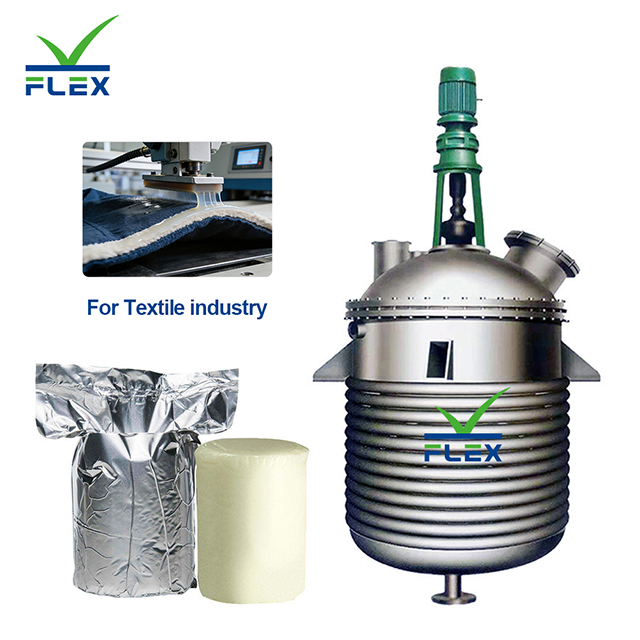
Fabric assemblies demand an adhesive that will not ruin the material's drape or feel. PUR bonds synthetic fabrics, natural fibers, polyurethane foams, and leather. It cures with a soft, flexible finish. It retains the tactile quality of the textile without stiffening or cracking over time. For specialized fabric applications, utilizing a targeted PUR Hot Melt Adhesive ensures optimal breathability and wash resistance.
 |  |
Different manufacturing sectors leverage this reactive chemistry to solve specific environmental challenges. The shift toward lightweight and durable goods relies heavily on advanced bonding techniques.
Furniture manufacturing utilizes PUR extensively. It handles edge-banding, profile wrapping, and flat lamination. Moisture and heat resistance are mandatory in these spaces. Kitchen cabinets and bathroom vanities must withstand steam, boiling water, and high humidity. PUR ensures veneers and edge bands do not peel off under these harsh conditions.
The automotive industry prioritizes durability and weight reduction. Manufacturers use PUR to bond headliners, dashboard components, and door panels. It easily secures fabric-to-plastic assemblies. Vehicle cabins experience extreme temperature fluctuations and direct UV exposure. PUR bonds survive high interior heat without outgassing or losing structural integrity.
Consumer electronics require precision and protection. Assembly lines use PUR for sealing displays and bonding battery casings. It helps assemble white goods like washing machines and refrigerators. In these environments, vibration dampening is critical. The adhesive provides watertight seals that protect sensitive internal components from moisture ingress.
High-performance fabrics rely on PUR for seamless lamination. It binds waterproof membranes to outer fabric layers in outdoor gear. In bookbinding, it revolutionized spine gluing. High-durability hardcovers require heavy page-pull strength. To achieve industrial-scale results, manufacturers utilize various PUR hot melt adhesive applications combined with specialized laminating machinery to ensure precise coat weights.
Substrate Type | Bondability Level | Key Performance Trait |
|---|---|---|
Porous (Wood, MDF) | Excellent | Deep fiber penetration, moisture barrier |
Engineered Plastics (ABS, PVC) | High | Low heat application prevents warping |
Metals (Aluminum, Steel) | High | Flexibility absorbs thermal expansion |
Textiles & Leather | Excellent | Retains flexibility and tactile feel |
LSE Plastics (Teflon, PP) | Poor (Untreated) | Requires plasma or corona treatment |
Despite its versatility, PUR is not a universal solution. Recognizing its limitations prevents costly production failures and excessive rework.
Certain plastics naturally resist bonding. Untreated Polyethylene (PE), Polypropylene (PP), Silicone, and PTFE (Teflon) fall into this category. PUR will not bond reliably to these materials straight out of the mold. The surface energy of these plastics is simply too low. To achieve a bond, you must alter the surface first. This requires specialized primers, flame treatment, or corona discharge treatment.
Prolonged exposure to direct sunlight affects standard PUR formulations. Exposed adhesive lines can yellow or degrade under intense UV light. If your product features visible bond lines outdoors, you face a cosmetic risk. To counter this, chemists must formulate the adhesive with specific UV stabilizers, or the joint design must hide the adhesive line from direct light.
PUR is a structural adhesive, but it is not a gap-filler. It requires tight mating surfaces to function correctly. If your parts have wide tolerances or uneven gaps, the bond will weaken. Furthermore, it requires adequate clamping pressure during the initial cooling phase. You must compress the parts together to achieve necessary "green strength" before the assembly moves down the line.
Transitioning from standard hot melts to PUR involves significant operational changes. You cannot simply drop this adhesive into your existing machinery.
PUR requires closed-system melters. Because it reacts with ambient humidity, exposure to air causes it to cure permanently inside the tank. You must use specialized pouch melters or bulk unloaders equipped with nitrogen or dry air blankets. These systems prevent premature curing and protect your capital equipment from irreversible damage.
Operators must understand the dual-curing timeline.
Green Strength: This is the handling strength achieved in minutes as the adhesive cools. It allows you to move the part without clamps.
Final Cure: This is the chemical cross-linking phase. It takes 24 to 48 hours to complete. Ambient humidity and temperature directly affect this timeline.
You cannot perform aggressive quality testing until the final cure finishes.
Workplace safety requires strict attention. Uncured PUR contains reactive isocyanates. Heating the adhesive releases vapors that can irritate the respiratory system. Facilities must install proper overhead ventilation. Operators need appropriate Personal Protective Equipment (PPE) during application, maintenance, and system purging.
System maintenance is non-negotiable. You cannot leave PUR sitting in unsealed heated hoses over the weekend. Highlight the operational necessity of using specific cleaning agents called purges. You must run these purges through the system before shutting down lines for extended periods. Failing to do so results in permanently clogged hoses and ruined nozzles.
Adopting reactive hot melts requires a strategic approach. Engineering and procurement teams must collaborate to ensure the investment yields distinct production advantages.
PUR costs more per pound than traditional EVA. However, you must evaluate the overall long-term financial impact. PUR often requires a significantly reduced adhesive volume per part. Because the bond is incredibly strong, you can frequently eliminate screws, nails, and other mechanical fasteners entirely. Furthermore, the robust moisture and heat resistance drastically lowers warranty claims and product rework, improving your overall bottom line.
Do not switch adhesives without rigorous validation. Engineering teams should follow a strict testing sequence. First, request technical data sheets (TDS) to match open times and viscosities to your cycle speed. Second, conduct substrate surface energy tests on your specific materials. Finally, run limited pilot batches. You must verify the 48-hour cure performance in your actual plant humidity conditions, as lab results often differ from real-world factory floors.
Choosing the right chemical partner dictates your success. Look for suppliers capable of providing custom open-time and set-time formulations. They should also offer deep technical support for equipment integration. When exploring various PUR hot melt adhesive applications, partnering with an experienced supplier ensures your assembly line transitions smoothly without unnecessary downtime.
PUR hot melt adhesive serves as a high-performance structural solution. It is ideal for demanding, dissimilar substrate combinations that traditional adhesives cannot handle. Its dual-curing mechanism delivers exceptional resistance to extreme temperatures, moisture, and chemical exposure.
Adopting this technology is a strategic manufacturing decision. It requires tight alignment between your engineering team for material compatibility and your operations team for safe equipment handling. The shift demands upfront investment in closed-system melters and strict maintenance protocols, but the resulting product durability justifies the transition.
We encourage decision-makers to consult directly with an adhesive specialist. Audit your current assembly line bottlenecks, identify your weakest joints, and request substrate-specific PUR samples. Conducting internal shear and peel testing will provide the definitive data you need to upgrade your manufacturing process confidently.
A: It achieves initial handling strength (green strength) in minutes to hours as the adhesive cools. However, the full chemical moisture cure takes 24 to 48 hours. This final cross-linking depends entirely on the ambient humidity and temperature in your facility.
A: No. Standard EVA tanks are open systems that allow ambient air and moisture exposure. This moisture will cause the PUR to permanently cure inside the tank, ruining the equipment. You must use specialized, moisture-sealed closed systems or pouch melters.
A: Once fully cross-linked, it is highly water-resistant and performs exceptionally well in humid environments like bathrooms or kitchens. However, if your product requires continuous, long-term underwater submersion, you must conduct specific environmental testing to ensure viability.
A: Yes. Light to moderate compression is typically required during the open time. Clamping ensures proper substrate "wet out" and holds the parts tightly together until the initial cooling set (green strength) is achieved, preventing gap formation.


