
English
Views: 0 Author: Site Editor Publish Time: 2026-08-01 Origin: Site


Transitioning from batch-mixing bottlenecks to continuous extrusion acts as a critical driver today. It protects tight margins in industrial adhesive manufacturing. You face ongoing demand for EVA (Ethylene-Vinyl Acetate) adhesives across multiple sectors. Despite the rapid rise of PUR alternatives, EVA remains entirely indispensable. The global market heavily relies on cost-effective, high-volume production for packaging lines, product assembly, and consumer goods. However, legacy manufacturing methods often create hidden financial losses. You lose substantial money through yield inconsistencies, severe thermal degradation, and unchecked energy waste. Upgrading your facility to a purpose-built EVA glue stick extruder directly addresses these exact challenges. It transforms unpredictable resin mixing into a streamlined, high-yield operation. You gain precise control over your compounding temperatures and internal pressures. This fundamental shift ensures your adhesive lines run significantly faster and produce superior product quality continuously.
 |  |
Continuous extrusion processes reduce thermal degradation risks and eliminate batch-to-batch viscosity variations.
Modern extruder die heads and specialized cooling lines guarantee dimensional stability (exact stick diameters), reducing scrap rates.
Evaluating equipment requires moving beyond baseline output (kg/hr) to assess L/D (Length/Diameter) ratios, PID temperature control, and automated cutting precision.
Let's look at production efficiency realistically. We define success not just by sheer machine speed. True efficiency means maximizing the ratio of saleable product against the raw materials and energy consumed. When we evaluate legacy methods objectively, serious bottlenecks become obvious quickly. You simply cannot afford raw material waste in today's competitive landscape.
Traditional reactor-to-mold methods often trap manufacturers in a continuous cycle of inefficiency. Batch processing means applying heat unevenly over extended periods. Operators must manually load base resins, waxes, and tackifiers into massive kettles. This introduces highly unpredictable heat histories. Extended heating degrades the polymer bonds severely. Furthermore, pouring thick mixtures into open molds traps unwanted air constantly. You end up relying heavily on manual labor for demolding, sorting, and packaging.
These uneven mixing processes lead directly to severe quality control failures. Unmelted resin forms stubborn gels. Surface defects ruin the aesthetic appeal of the final product. Poor mixing creates dimensionally rejected glue sticks. When diameters fluctuate even slightly, end-users experience immediate jamming in their application glue guns. This results in costly customer complaints and rejected shipments.
We should note legacy systems are not completely obsolete. They still work adequately for small, highly specialized laboratory runs. However, they become mathematically inefficient for scaling high-volume EVA adhesive manufacturing. You cannot maintain tight dimensional tolerances across tons of material using outdated batch methods. Continuous demand requires a continuous solution.
To grasp the extrusion advantage fully, we must understand continuous compounding. Specialized co-rotating twin-screw or single-screw extruders change the game entirely. They integrate melting, mixing, and pumping into one seamless thermodynamic sequence. You no longer move materials manually between discrete mixing kettles and forming machines. Everything happens inside one closed system.
The extruder screw geometry plays a massive role here. It applies precise mechanical shear to the polymers. This kinetic energy melts EVA pellets and tackifying resins evenly. The system constantly balances shear heat and applied barrel heat. Consequently, you melt the complex formulation fully without burning the sensitive polymer backbone. Proper shear mixing ensures every additive disperses perfectly.
Melt pressure stabilization further ensures continuous product quality. Manufacturers often add precision gear melt pumps. They also rely on highly optimized screw flight designs. These components maintain constant pressure right at the die head. A stable pressure prevents material surging entirely. No surging means every single glue stick maintains uniform weight, density, and diameter.
Finally, high-end extrusion lines feature crucial de-gassing capabilities. Vacuum venting zones pull away trapped ambient moisture. They also remove volatile organic compounds generated during compounding. This active extraction eliminates internal structural bubbles completely. A bubble-free stick melts evenly for the end-user and prevents application sputtering.
Unified Processing: Melting, mixing, and shaping occur simultaneously inside one enclosed barrel.
Controlled Shear: Specialized screw geometry prevents localized burning of sensitive resins.
Pressure Stability: Integrated melt pumps eliminate uneven flow surging at the die.
Active De-gassing: High-powered vacuums remove moisture to prevent structural voids.
 |  |
Not all extrusion lines deliver equal performance. When selecting a new hot melt glue stick machine, you must evaluate specific technical criteria carefully. Baseline output numbers rarely tell the whole story. You need equipment built for exact precision.
First, examine the screw design and Length-to-Diameter (L/D) ratios closely. A high L/D ratio provides sufficient residence time inside the barrel. Your EVA blends need this specific time to melt and mix properly. If the barrel is too short, you get unmixed gels. If it is too long, you risk severe thermal degradation. An optimal ratio ensures perfect homogeneity.
Next, demand precision temperature control systems. Multi-zone PID (Proportional-Integral-Derivative) controllers remain absolutely non-negotiable. They maintain a tight ±1°C accuracy across the entire barrel length. Different zones require vastly different temperatures. You must heat solid pellets aggressively while cooling the final mix slightly before extrusion.
You must also evaluate die head and water cooling integration. The rapid transition from die to cooling bath dictates final quality. Multi-stage graduated cooling proves vital here. You start with warm water and gradually transition to cold water. If you shock the hot polymer with ice-cold water immediately, you cause severe outer shrinkage. This sudden thermal shock pulls the material apart, creating internal vacuum voids.
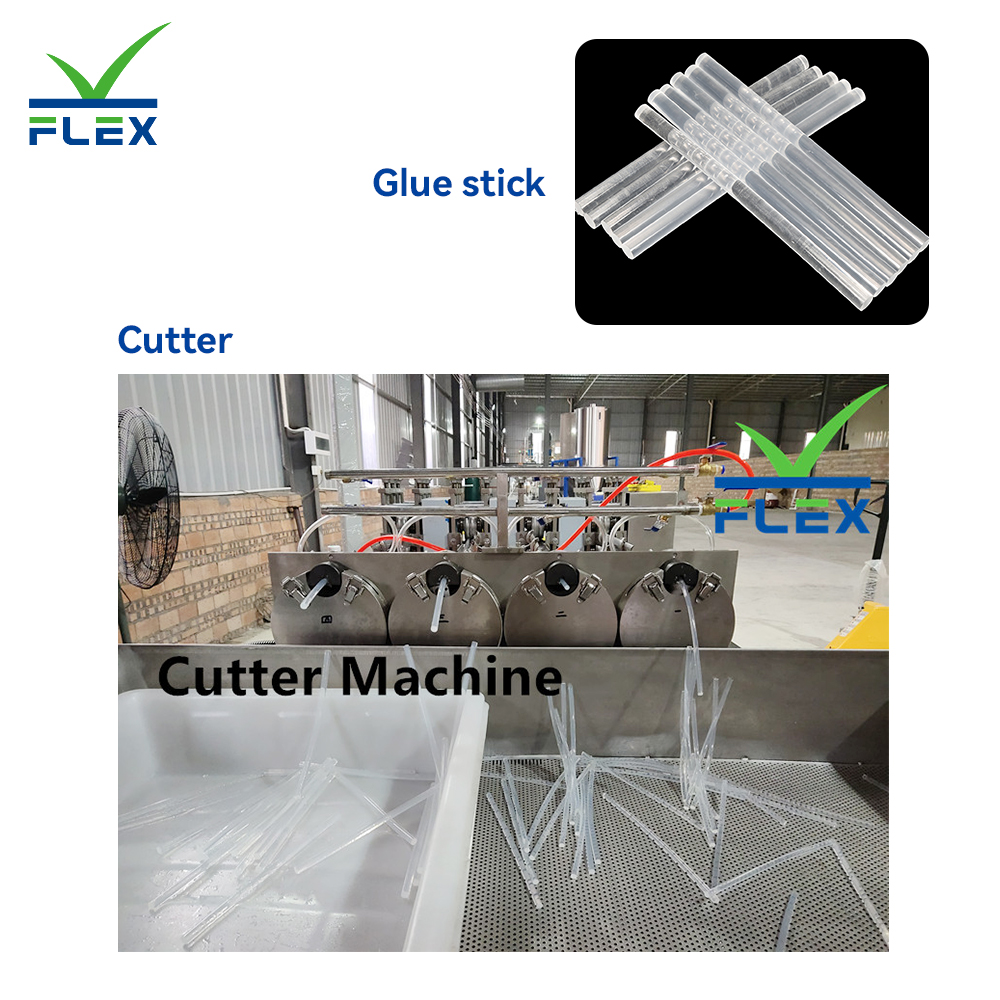
Finally, review the traction and cutting automation systems. The haul-off unit pulls the continuous strand smoothly. Servo-driven rotary cutters then slice the strand rapidly. These synchronized mechanisms guarantee exact length tolerances. They also ensure clean, perfectly flat edges without mechanical deformation.
Equipment Evaluation Framework
Machine Component | Critical Engineering Specification | Direct Production Benefit |
|---|---|---|
Extruder Screw | Optimized L/D Ratio (typically 28:1 to 32:1) | Ensures complete mixing without burning the polymer. |
Temperature System | Multi-zone PID Controllers (±1°C accuracy) | Prevents resin degradation and sudden viscosity drops. |
Cooling Tank | Multi-stage graduated temperature zones | Prevents internal voids and severe surface warping. |
Cutting Unit | Servo-driven high-speed rotary blades | Guarantees exact length and perfectly clean cuts. |
Upgrading your production brings immense daily benefits. However, implementing modern EVA hot melt adhesive production systems involves facing real-world challenges. You must prepare for physical and operational adjustments to ensure a smooth transition.
First, consider your footprint and layout constraints carefully. High line speeds exceeding 100 kg/hr require extensive cooling time. The physical cooling tank often stretches well beyond 10 meters in length. You must ensure your facility floor can accommodate this long linear layout without disrupting other workflows or blocking safety exits.
Material changeovers present another highly practical difficulty. Purging high-tack EVA formulas takes significant time and physical effort. You should prioritize extruders featuring self-wiping screw profiles. Easily accessible die heads also drastically reduce your cleaning downtime between color or formula changes. Faster changeovers keep your operations highly agile.
Operator adoption requires careful, proactive management. Your team must shift from manual batch oversight to modern HMI (Human-Machine Interface) monitoring. They face a distinct technical learning curve. Operators need dedicated training to troubleshoot melt pressure fluctuations. They must learn to interpret digital system alerts effectively rather than relying on visual guesswork.
Safety and regulatory compliance cannot be ignored. These machines operate constantly at high temperatures and high internal pressures. Verify all machine guarding remains robust and tamper-proof. Ensure emergency stop buttons are highly visible across the line. Confirm the entire equipment package meets relevant electrical compliance standards like CE or UL to protect your workforce.
Map your factory floor exactly to scale before ordering long cooling tanks.
Stock specialized purging compounds designed specifically for high-tack resins.
Run simulated HMI training sessions before the live equipment arrives on site.
Audit all electrical drop points for strict CE/UL compliance safety.

Selecting the perfect machine requires balancing engineering theory against operational reality. You need a highly logical approach to finalize your major investment. Do not rush this procurement phase.
Always compare theoretical capacity against everyday operational reality. Equipment sellers frequently quote maximum possible throughputs under ideal conditions. You should heavily discount these theoretical numbers by 15-20%. This buffer accounts for real-world OEE (Overall Equipment Effectiveness). Unplanned downtime for minor maintenance, screen changes, and formula changeovers always happens.
Require a strict Factory Acceptance Testing (FAT) phase. Urge your buying team to mandate a comprehensive wet test. You must run your specific EVA resin and tackifier formulation through the machine. Do this before the supplier ships the heavy equipment. This proves definitively that the machine handles your exact viscosity profile without surging or burning.
Evaluate aftermarket support and spare parts availability intensely. Extrusion machines naturally experience internal wear over time due to abrasive fillers. Ask the supplier about their guaranteed response time for shipping replacement heaters. Check their domestic inventory of critical thermocouples and specialized rotary cutting blades. Waiting weeks for a simple sensor will cripple your output.
Your immediate next-step action involves deep data gathering. Initiate a thorough process audit of your current daily scrap rates. Document your existing energy usage per completed batch accurately. You need this hard data to build an accurate internal ROI model. Only after establishing these baselines should you issue a formal RFP.
An advanced EVA glue stick extruder completely transforms industrial adhesive production. It permanently shifts your operations from an unpredictable batch art into a highly controlled science. You gain measurable, scalable, and highly repeatable results every single day. This level of control virtually eliminates costly batch rejections.
The most efficient machinery successfully balances high throughput with operational flexibility. You want rapid formula changeovers and consistently low scrap generation. Blindingly high speed means nothing if you spend ten hours cleaning the barrel manually. Smart engineering ultimately outpaces sheer horsepower.
We strongly encourage production engineers to take immediate action today. Review your current formulations thoroughly and baseline your existing scrap rates. Consult directly with specialized extrusion manufacturers. They can easily help you map out a customized line layout. Upgrading your equipment protects your margins, reduces waste, and secures your competitive market position for years to come.
A: It depends strictly on the polymer type. Polyamides might run successfully with minor screw modifications and temperature adjustments. However, reactive Polyurethane (PUR) requires entirely different machinery. PUR is moisture-curing. It demands a completely sealed, moisture-free system from melting to packaging to prevent premature cross-linking. Standard EVA open-water cooling tanks will instantly ruin PUR adhesives.
A: You should never use a single uniform temperature. The ideal setup uses graduated multi-stage cooling. The bath should start warm, typically around 40°C, right after the die head. It should graduate down to a chilled 10-15°C at the very end. This multi-stage approach prevents sudden surface thermal shock and internal vacuum voids.
A: Many adhesive formulations contain abrasive tackifiers or mineral fillers. Over time, these hard materials grind against the metal. This increases the clearance gap between the screw flights and the barrel wall. Increased clearance causes polymer backflow inside the barrel. You will see reduced output rates and eventually need screw refurbishing or full replacement.


