
English
Views: 0 Author: Site Editor Publish Time: 2026-04-09 Origin: Site


High-speed hygiene manufacturing demands extreme precision. Modern production lines output baby diapers and sanitary pads at blistering speeds. They often exceed 800 pieces per minute. At this velocity, balancing rapid line speeds alongside strict hygiene standards and raw material consistency becomes a constant operational tension.
Poorly packaged or inconsistent Hot Melt Pressure Sensitive Adhesive (HMPSA) severely disrupts continuous diaper and pad production. Irregular adhesive blocks lead to frequent glue blockages, uneven melting rates, and highly costly machine downtime. You can resolve this critical component problem by integrating an HMPSA adhesive PLC automatic packaging machine. This equipment stands as the modern industrial standard. It expertly transforms bulk adhesive into precise, retail-ready, EVA-wrapped pillow packs.
This article serves as a technical evaluation guide. It helps procurement and operations leaders upgrade their adhesive processing and sourcing capabilities. You will discover exactly how automated adhesive packaging significantly improves downstream hygiene manufacturing ROI.
Precision Control: PLC integration (e.g., Beckhoff, Siemens) ensures exact weight accuracy (500g–1500g pillow packs), stabilizing the adhesive-to-product ratio in downstream hygiene lines.
Hygiene & Compliance: Automated Form-Fill-Seal (FFS) processes eliminate manual handling of HMPSA, reducing contamination risks critical to baby and feminine care products.
Operational Scalability: High-speed configurations process 1,000kg to 3,000kg per hour, matching the continuous raw material demands of modern diaper factories.
Cost Efficiency: Servo-driven automation reduces labor costs, energy consumption (by 20-30%), and material waste.

Hot Melt Pressure Sensitive Adhesive acts as the structural binder for hygiene products. It secures absorbent cores, elastic leg cuffs, and side seams. However, irregularly sized adhesive blocks melt unevenly. When large, inconsistent chunks drop into a diaper manufacturer's melt tank, they trigger a sudden thermal shock. This abruptly lowers the tank's internal temperature and drastically alters the viscosity of the melted glue.
Consequently, downstream applicator nozzles spray inconsistent coating weights. This uneven application directly causes weak leg cuffs or sudden side seam failures. These manufacturing defects ruin entire product batches and severely damage brand reputation. Consistent adhesive supply is not merely an operational preference. It is a strict manufacturing necessity.
Manual adhesive packaging carries a massive, hidden Total Cost of Ownership (TCO). Human operators must handle intensely hot, sticky materials. This dangerous environment exposes them to severe workplace burns and repetitive strain injuries. Facility labor overhead inflates rapidly as you hire more floor staff to keep pace with growing output demands.
Furthermore, manual handling introduces unacceptable hygiene risks. Human contact easily introduces stray hair, airborne dust, or foreign particulates into the adhesive blocks. Baby diapers and feminine care pads require strictly hygienic, medical-grade components. Contaminated HMPSA ruins downstream materials. You subsequently face rejected retail shipments and highly damaging product recalls. Automating this step totally removes the human element and secures component purity.
Modern industrial adhesive manufacturing relies heavily on advanced digital control systems. Programmable Logic Controllers (PLCs) form the highly intelligent brain of these packaging units. Tier-1 brands like Beckhoff and Siemens engineer these robust control boards. They utilize closed-loop feedback systems to continuously monitor material flow rates.
This digital monitoring guarantees extraordinary weight accuracy. The PLC adjusts the pump and extrusion pressure in real time. It ensures every HMPSA pillow pack precisely meets the strict dimensional and weight tolerances demanded by diaper manufacturers. When glue pillows weigh exactly 500g or 1000g, melt rates inside the application tanks remain perfectly predictable. This digital stability firmly optimizes the final adhesive-to-product ratio.
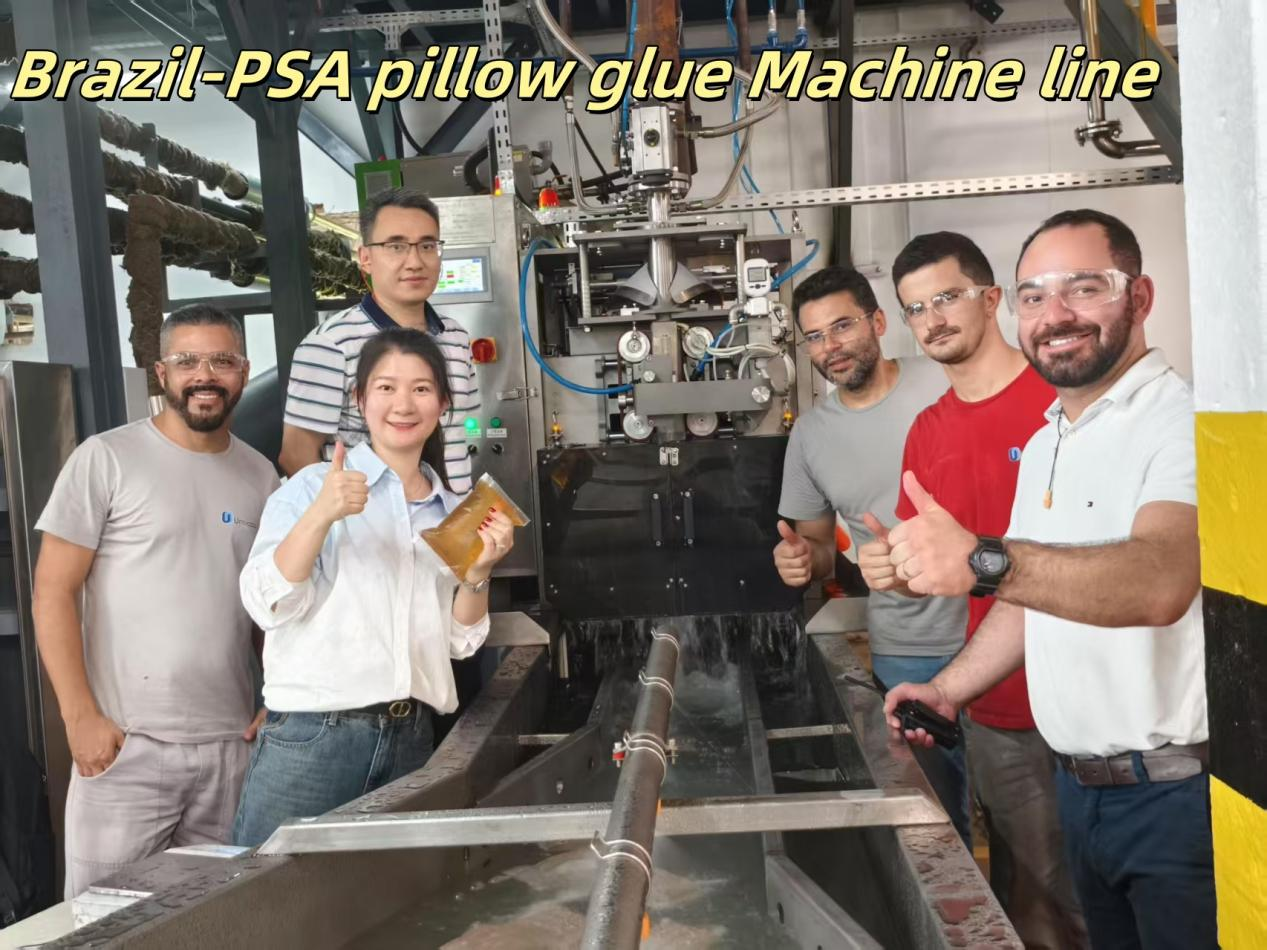
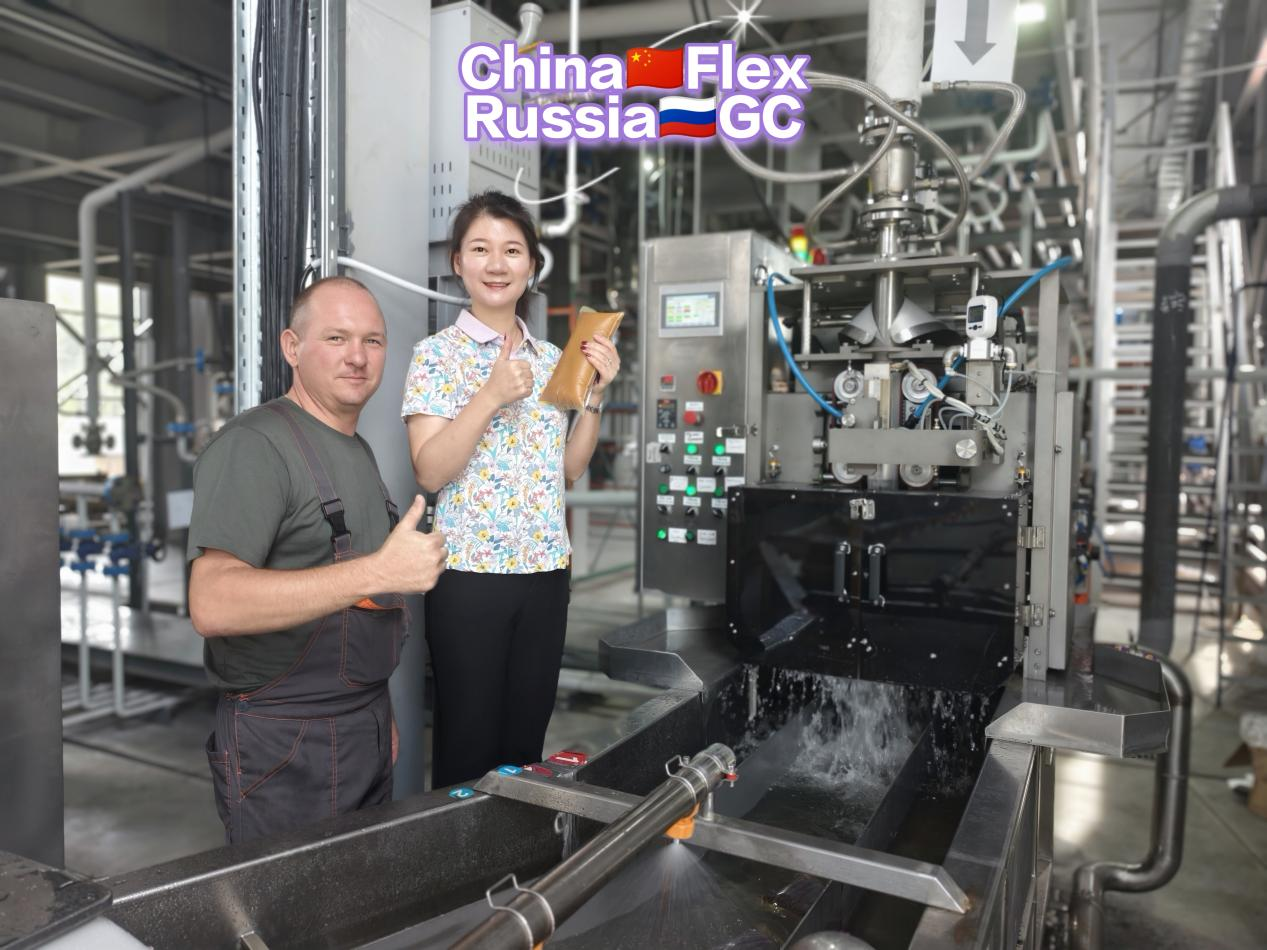
The core packaging phase utilizes a highly efficient continuous Form-Fill-Seal (FFS) process. Bulk liquid adhesive flows directly into a specialized co-extrusion die. Simultaneously, the equipment wraps the flowing adhesive in a tough PE film. The machine rapidly seals the edges and cuts the continuous flow into individual, perfectly sealed pillow packs.
This PE film delivers a unique chemical advantage. It shares a nearly identical melting point with the HMPSA material itself. When diaper factory operators drop the packaged adhesive into their melt tanks, the PE film melts seamlessly. It dissolves entirely into the adhesive formulation. You achieve 100% material utilization and generate zero packaging waste. Operators never need to unwrap cardboard boxes or manually peel off sticky silicone release paper.
Procurement leaders must thoroughly look beyond the machine's external shell. You must audit the internal mechanical bill of materials. Continuous thermal packaging operations place immense stress on all internal moving parts. High-grade industrial components prevent sudden, catastrophic machine breakdowns.
Look specifically for industry-standard pneumatics and Tier-1 servo motors. Ensure the equipment utilizes premium forged steel bearings, highly favoring brands like NSK. The entire chassis and contact surfaces should feature SS304 stainless steel. This robust material powerfully resists rust, chemical corrosion, and high thermal stress. A durable, well-pedigreed machine sharply reduces maintenance frequency.
Factory floor space always commands a premium. You require equipment offering massive throughput without demanding an excessively large physical footprint. A commercially viable machine must expertly balance physical size and raw output.
Top-tier models comfortably handle 1,000kg/h to 3,000kg/h. This exceptional capacity easily feeds high-speed baby diaper lines without ever causing raw material bottlenecks. Before purchasing, rigorously evaluate the capacity benchmarks against your available floor space.
Below is a quick comparison table illustrating standard expectations across different operations:
System Type Typical Output (kg/h) Floor Space Requirement Labor Needed per Shift Manual Pour & Pack 300 - 500 Massive (requires extensive cooling trays) 4 - 6 Operators Basic Semi-Automated 500 - 1,000 Medium 2 - 3 Operators Advanced PLC FFS Unit 1,000 - 3,000 Compact (Vertical Integration design) 1 Operator
Agile production schedules require rapid mechanical adjustments. Downstream diaper manufacturers frequently request differently sized adhesive packs. You must carefully assess the machine's ability to switch packaging formats quickly.
Modern machines process standard pillow pack sizes with incredible ease. They shift smoothly between 500g, 1000g, and 1500g formats. Line operators simply select these pre-programmed recipes via intuitive HMI touchscreens. You should strictly aim for format changeover times under 30 minutes. Faster changeovers directly minimize idle downtime. They allow your facility to fulfill varied client orders without losing an entire production shift to mechanical retooling.
Automating your glue packaging line drives tremendous financial returns. Transitioning to servo-driven automated lines directly slashes your daily operational costs. Servo automation operates with extreme electrical efficiency. It draws facility power only exactly when necessary to move a mechanical load.
This dynamic efficiency reduces energy draw by 20% to 30% when directly compared to traditional asynchronous motors running constantly. Furthermore, the FFS process operates almost entirely autonomously. You can easily reallocate two to three manual operators per shift to higher-value quality control tasks. These substantial, compounding savings shorten the equipment payoff period drastically.
Deep digital integration powerfully boosts your factory's OEE. Modern PLCs feature excellent Industrial IoT (IIoT) capabilities. Plant managers can directly connect the packaging equipment to central cloud dashboards.
They effortlessly track real-time scrap rates, hourly output metrics, and total machine uptime. You gain total, transparent visibility over your production yields. This incoming data allows maintenance teams to identify minor bottlenecks before they escalate into major stoppages. Pushing your factory OEE closer to the 85%+ world-class benchmark becomes a highly realistic goal.
| Production Metric | Manual Operations | PLC Automated FFS |
|---|---|---|
| Availability | 65% | 92% |
| Performance | 70% | 95% |
| Quality (Yield) | 85% | 99.5% |
| Overall Factory OEE | 38.6% | 86.5% |
Installing heavy industrial equipment requires highly careful site preparation. A perfectly seamless rollout depends strictly on your facility meeting certain utility prerequisites. You must prepare your factory infrastructure long before the delivery truck arrives.
Follow these critical facility preparation steps:
Stable Power Infrastructure: Ensure a highly stable 380V three-phase power supply. Unexpected voltage fluctuations severely damage sensitive PLC motherboards and servo controllers.
Clean Compressed Air: Install a clean, thoroughly dried compressed air line. Fast-moving pneumatic cylinders require completely moisture-free air to prevent internal rust and seal failure.
Thermal Ventilation: Set up proper overhead exhaust systems. Continuous hot melt processing generates highly significant ambient heat. Good ventilation protects both your operators and the machine's electronic components.
Chilled Water Supply: Certain configurations utilize a chilled water bath to quickly cool the pillow packs. You must verify your facility's chilled water loop capacity beforehand.
Any newly introduced technology inherently creates a learning curve. Your floor staff must fundamentally understand how to interact with the new PLC systems safely. Successful implementation absolutely requires comprehensive workforce training.
You must upskill your mechanical maintenance crews. They need fundamental training on PLC error troubleshooting and HMI navigation. Meanwhile, daily operators must learn how to calibrate the automated heat-sealing jaws accurately. Incorrect sealing temperatures cause the EVA film to burst or leak. Invest heavily in vendor-led training sessions. Proper technical education vastly prevents early operator errors and maintains strict workplace safety.
Selecting the right vendor heavily dictates your automation project's success. You genuinely need a partner possessing deep engineering expertise. When choosing an HMPSA adhesive PLC automatic packaging machine manufacturer, rigorously scrutinize their track record.
Ask specifically for proven use-cases operating within the hygiene sector. A highly reliable manufacturer will provide highly transparent testing documentation.
Use this strict checklist when evaluating potential suppliers:
Request fully documented Factory Acceptance Testing (FAT) protocols well before shipment.
Verify they offer comprehensive Site Acceptance Testing (SAT) engineering support at your actual facility.
Demand to see reference videos showcasing their equipment successfully running at maximum 3,000kg/h capacities.
Confirm they deliberately source standard wear parts from global brands (Siemens, NSK, Beckhoff) rather than cheap, proprietary alternatives.
All industrial equipment eventually requires maintenance. Lightning-fast issue resolution actively prevents catastrophic factory downtime. In a facility running 24/7 diaper manufacturing lines, every single minute of lost production bleeds thousands of dollars.
Emphasize the paramount importance of robust after-sales support. Choose an engineering partner actively offering rapid deployment of critical wear parts. Rotary cutting blades, thermal sealing jaws, and photoelectric sensors require semi-regular replacement. Your supplier must reliably maintain local stock or explicitly guarantee expedited global shipping. Strong after-sales support ensures your packaging line runs continuously and profitably.


Investing in automated HMPSA packaging represents far more than a basic equipment upgrade. It serves as a highly critical supply-chain stabilizer for diaper and sanitary pad manufacturers. These fast-paced facilities demand zero-defect raw materials to maintain their aggressive line speeds. By totally eliminating manual handling, you completely remove contamination risks and perfectly stabilize downstream glue melting rates.
To move your automation initiative forward, carefully consider these actionable next steps:
Calculate your current manual packaging losses, thoroughly factoring in excess labor costs and rejected material batches.
Explicitly define your exact throughput requirements in kilograms per hour to properly size your new machinery.
Audit your factory floor space and utility readiness (especially 380V power and clean compressed air lines).
Contact a highly qualified machinery manufacturer to request a deep technical consultation or a live equipment demonstration.
A: Typically configurable for 500g, 1000g, and 1500g pillow packs, adjustable via the PLC interface.
A: No. The machine uses a specific EVA film designed to melt seamlessly with the HMPSA inside the application tank, leaving no residue and ensuring 100% material usage.
A: It eliminates human error by precisely controlling the extrusion temperature, filling weight, and cooling/sealing times, ensuring completely uniform blocks that melt predictably in diaper manufacturing lines.
A: Depending on the manufacturer and customization requirements, standard B2B lead times range from 30 to 60 days following order confirmation and initial deposit.


